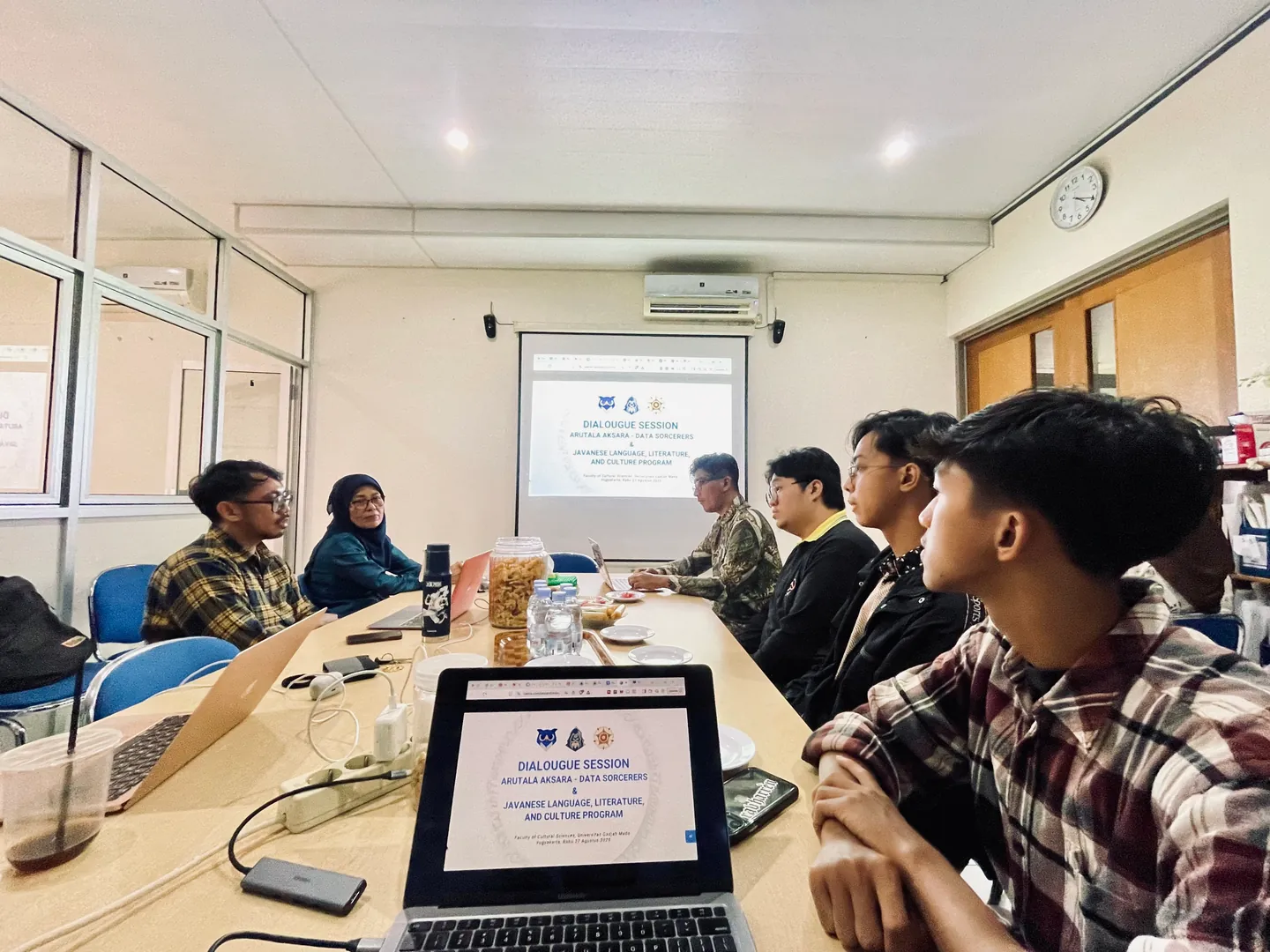
YOGYAKARTA — Arutala Aksara by Data Sorcerers met with Universitas Gadjah Mada’s Javanese Language, Literature, and Culture study program on 27 August 2025 to explore collaboration on digital learning for Javanese script.
The dialogue brought together three connected areas: opportunities for joint research, expert validation of learning material, and the practical use of an application. Dr. Daru Winarti, M.Hum.; Zakariya Pamuji Aminullah, S.S., M.A.; and Imam Prakoso, S.S., M.A., participated in the discussion at UGM’s Faculty of Cultural Sciences.
For Arutala Aksara, the meeting placed a software-development question alongside a cultural and educational one. Making a script available on a screen is only part of the task. A learning application must also help someone understand what they are reading and how the writing system works.
Why the script needs more than a digital image
The technical structure of Javanese illustrates that challenge. The Unicode Standard describes consonants with an inherent vowel and combinations in which a following consonant can take a subjoined form. It also documents the marks used to modify sounds. The relationships between characters therefore matter alongside the appearance of individual signs.
For application design, this means that a recognizable character is not necessarily a complete learning example. A learner may need an explanation of how signs combine, why a form changes, or how a written example relates to its reading. These are questions that bring subject expertise directly into the design of a learning experience.
The Unicode specification supplies a technical reference for representing the script. Decisions about teaching order, appropriate examples, and the clarity of an explanation require a different kind of judgment. That distinction helps explain the value of a dialogue between developers and specialists in Javanese language and culture.
Connecting research, review, and use
The three areas discussed at UGM can inform different stages of development. Research can establish a focused question about the application and the evidence needed to investigate it. Expert validation can examine whether content and explanations are appropriate. Practical use can reveal how learners engage with the material.
As a design consideration, these stages work best when they inform one another. If an example is difficult to understand, the issue may lie in its explanation or presentation rather than the learner’s ability. If content requires correction, that correction should be traceable in the material used by the application. These are implications for future work, rather than activities reported as completed at the meeting.
The dialogue gave Arutala Aksara a setting in which to explore that relationship with academic specialists. It centered the knowledge needed to assess a learning tool, alongside the technical work needed to build one.
Preservation through opportunities to learn
For Data Sorcerers, digital preservation includes creating opportunities for people to encounter and practice a script. A learning application can be one route into that work, particularly when its development remains connected to the people who study, teach, and use the language.
The August dialogue was an exploratory step toward that connection. It established research collaboration, expert validation, and application use as shared topics for further discussion. The direction is concrete: bring technical development into closer contact with linguistic knowledge so that a digital tool can support a meaningful learning experience.
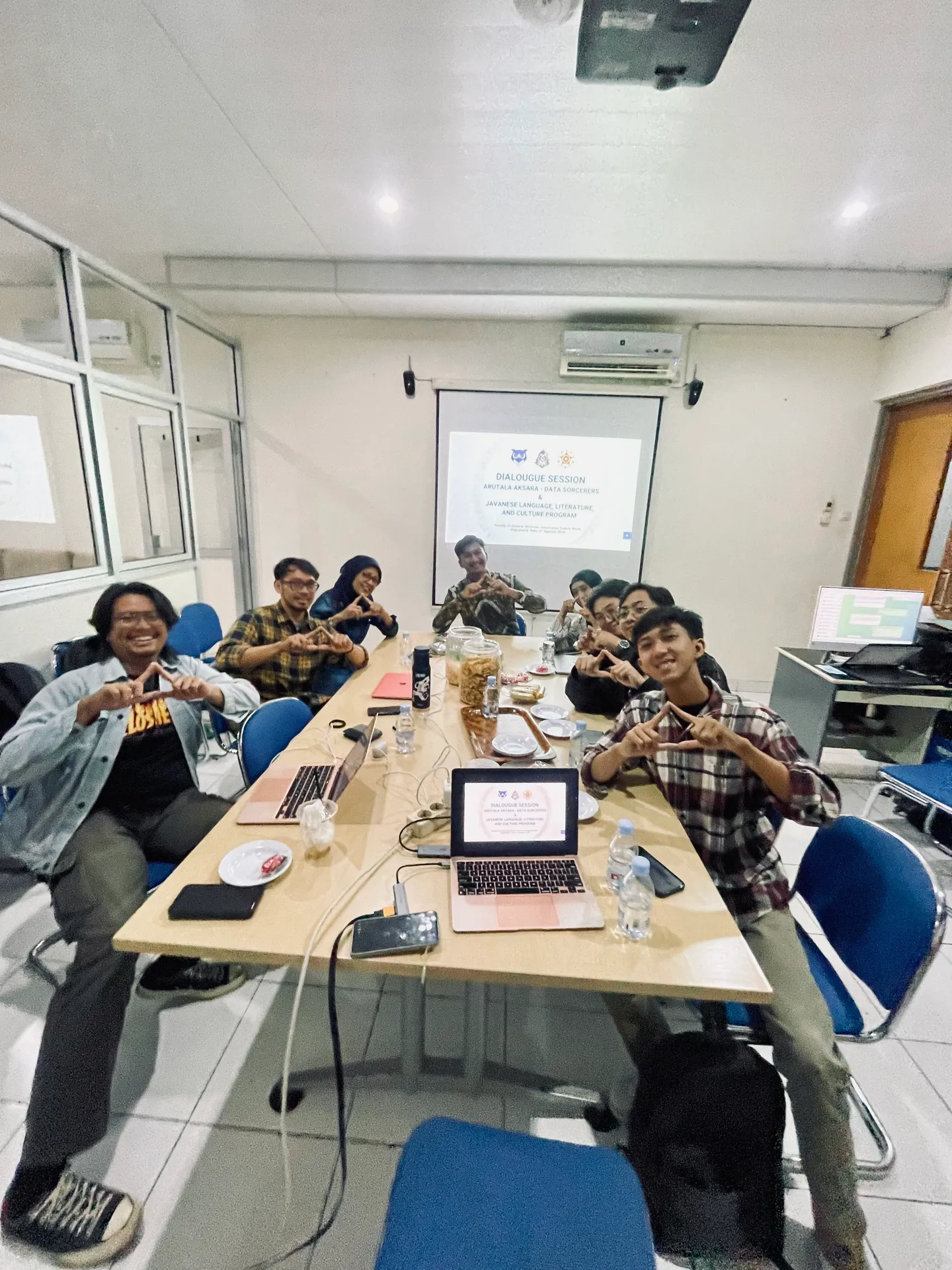
Event details and photographs supplied by Data Sorcerers. UGM profiles verify the names and academic affiliation; they are not reports of the dialogue. Archive note: this website edition was added on 1 November 2026. The date above follows the original reporting or event record. Event date: .